Car-user paid model for funding bike-transportation infrastructure; a cheeky proposal reconsidered for 2025

Featured

I wrote this first in 2023 as a thread of tweets, back when Twitter was good and Edmonton’s city council had failed to fully budget for completion of the planned bicycle-as-transportation infrastructure. Mine was an audacious, madcap response to council budgeting just 50% of the estimated cost for a city-wide sytem of connected routes for active transportation, understood at the time to be bike lanes, aka mobility lanes. in a $7.9 billion dollar capital budget that allocated $600 million for “Recreation and Cultural Programming”, and $517.6 million for “Yellowhead Trail Freeway Conversion”, only $100M for enabling Edmontonians city-wide to choose to bike, walk, or roll instead of drive. This, despite a single car overpass costing $180m, whilst three of six city priorities for the 2023-2026 budget and an overall city goal for 50% of all trips to be made “using less carbon intense modes like cycling, wallking and transit”, depended on the modal shift that a connected, safe, active transportation network would provide.
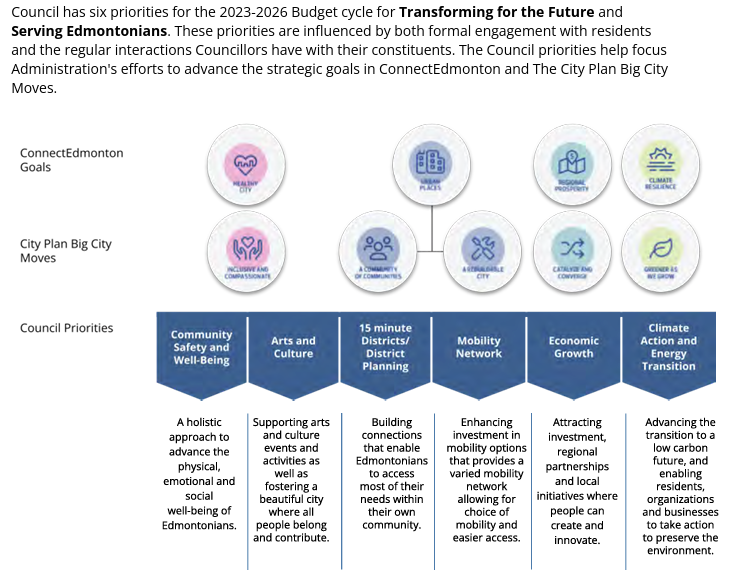
Screenshot from page 14 of the 2023-2026 Edmonton Capital budget, showing the six priorities: Community Safety and Well-Being, Arts and Culture, 15 Minute Districts/District Planning, Mobility Network, Economic Growth, and Climate Action and Energy Transition.  
https://www.gov.edmonton.ab.ca/sites/default/files/public-files/2023-2026CapitalBudget.pdf?cb=1750461215

I’m updating the original blog post now, in October of 2025, just after municipal elections in which we saw unprecidented intrusion by the provincial government into municipal affairs (eg: here, and here), thousands of political dollars donated to a new party hoping to ensure UCP aligned candidates were elected, and candidates who tried to cancel bike lanes and then used bike lanes as a dogwhistle to rally support to a regressive agenda. Despite the anti-bike, anti-15 Minute city, anti-infill rhetoric, political polling did not indicate bike lanes were actually an election issue. A Taproot poll early in the campaign cycle indicated that Edmontonians want a more walkable city, including ease of movement for all-season cylists and mobility-device users:

“For non-drivers, crossings are brutal for weeks on end,” a respondent said. “Bikers, without bike lanes, are left with few options beyond the sidewalks, but then are forced to make dangerous road crossings, as well, through four-to-six inches of mush. (I can’t imagine what the experience is like for people who use mobility devices).” (Gallant, The Pulse, Sept 25’25)

In the end, the majority of councillors elected or re-elected were those who support active transportation, 15 Minute city planning, densification and using municipal power to ensure well-being and housing for unhoused Edmontonians.

We even elected an all-season-cyclist as mayor!

That 2023-2026 Capital Budget that seemed so progressive will soon end. Planning for the next budget cycle (2027-2030) will likely start as soon as the new councillors are sworn in. It is therefore not too early to consider these questions:

  • Did we get the active transportation network that would allow for the city-wide, all-season, bicycle-as-transportation infrastructure that we needed?
  • What did the original $100M cover, and what still needs to be completed?
  • Will access to active transportation be equitable, so that all neighbourhoods have safe, accessible routes to ride to retail, schools, entertainment, etc.?
  • What do the residents outside the Henday (Edmonton’s ring highway system) need, so as to be able to choose bikes as transportation?
  • Have we, as a city, reduced our carbon footprint?
  • Are we going to meet our transition to low-carbon goals?

However those questions are answered, it’s pretty clear that wider circumstances –USA’s rogue attitude towards trade deals, persistence of the homelessness and opiod poisoning crises, intransigence of the provincial government– mean that money will be tight for 2026-2030. The next capital budget cycle will not be easy.There are many of our neighbours who bought the koolaid that active transportation and walkability are frivolous. Which means that perhaps a novel idea for policy that considers a new source of revenue, that incentivizes a greener, bicycle-savouring, property tax-stabilized municipal budget is not so madcap after all?

—————— ~~~~——————


Ok, bear with me; working through an idea.

The City of Edmonton’s urban and budgeting planners have estimated that to institute the bike transportation infrastructure needed to meet the city’s climate crisis, human well-being & municipal tax-affordability goals, would cost $200M (in 2022 dollars; make that $225 million in 2026?). It’s a very low price compared to other transportation infrastructure costs in the city’s budget.

But in the budget deliberations, only $100M was allocated for the 2023-2026 fiscal years.

So we have a shortfall of $100M over the 2023-2026 budget cycle (call it $120M for 2026).

Funding bike-transportation infrastructure is a smart move on city council’s part.

Car-dedicated infrastructure (roads, parking, parking lots, road maintenance machinery, etc.) is a huge part of a municipal budget, and no matter how much is budgeted, it is always inadequate: cities have learned that building roads induces demand for more traffic. It increases costs, risk, noise, and pollution rather than easing congestion or generating revenue. Car-infrastructure is ruinous for city budgets. Car-infrastructure is a disincentive to climate change mitigation. Car-infrastructure makes urban areas unpleasant. Taxpayers are never satisfied with what cities and municipal councils institute.

Bicycle infrastructure by contrast is cheaper to maintain. Bicycles don’t beat up the roads the way cars and trucks do. Bicycles don’t kick up particulates or create din the way cars do. Bicycle riders have better range of vision, fewer blind spots, than drivers, and they move at a slower speed, thus reducing collisions and dramatically reducing injuries and deaths. With bike transportation infrastructure, induced demand actually reduces risk, noise, pollution and costs to municipal budgets, and thereby to taxpayers.

So, it’s in a city budget maker’s best interest to encourage the increase of bicycle use while incentivizing decreases in car use. But funding 50% is like riding half a bicycle. Doable, not optimal. What are a city’s options?

In Canada, municipal legislation gives cities property taxes, bylaws & zoning as their tools. Fairly limited options. Municipalities may not, for example, impose extra taxes on drivers using certain neighbourhoods, the way UK & EU cities have done to reduce cars & incentivize public transit or bike use. Sadly, Canadian municipalities don’t have the lever that NYC does to reduce congestion and raise revenues.

But, WHAT IF the city used the prerogative over property taxation to assess a special “Climate Crisis Levy” on commercial properties dedicated to activities that enable car-use? WHAT IF the city dedicated all revenues from that extra levy to meeting the $100M-plus shortfall? 

Commercial properties, not residential properties. What kind of commercial properties? Low-hanging fruit are properties hosting gas stations, car dealerships, automotive repairs, auto-body shops, tire-sellers, vanity mufflers, car-washes, etc.

Of course, the property owners (landlords) would kvetch. Then they would pass on the levy-cost to the commercial operators leasing those properties. They, of course would raise their prices to their clientele, the citizens engaging in transportation choices that favour car-use, negatively impacting our environment, local quality of life, and collective municipal costs.

While building the piggy bank for the climate crisis-fighting infrastructure we need, ie: the missing $100+ million, the increased prices for car-fuel, car-repairs, etc, would create disincentive pressure on car use, whilst simultaneously ensuring the car-users pay (indirectly) for the costs they impose on the municipal budget. 

City council could vote to make such a special assessment temporary – eg, until the bike network/active transportation infrastructure project is completed & paid for. That’s how the province of British Columbia funded the Vancouver Airport upgrade- through a temporary levy on every traveller transiting YVR. Or council might not. City council might, for example, use the levy to pay for a bike network, then dedicate any surplus to neighbourhood renewal, community gardens, parks, e-bike subsidies, free bikes for refugees, bike-taxis for seniors’ residences, or any other climate crisis mitigation and improved urbanism measures they choose.

Would a city like Edmonton do this? Councillor Aaron Paquette generously responded to my original tweet thread and pointed out that while this mechanism would work IF a city was isolated, municipalities are not isolates and may be competing with neighbouring municipalities for commercial land rents. Municipalities are therefore leery of chasing away property tax paying commerce. However, I pointed out, in the middle term, it is unlikely businesses like gas stations or tire warehouses will accept the major expense of relocating their business across municipal boundaries – their customers are local, and the requirements for environmental cleanup after quitting a site are costly and complicated. It’s a better business decision to just pass on the cost. If, over the long term, those businesses decided to change their business model, shift away from serving car-users, or if property owners become more reluctant to lease their land to car-serving business, that’s actually a positive for the city, which should prefer urban commerce which enhances a net-zero, circular economy.

Would the ‘municipal isolation’ concern be a problem, really? Wouldn’t other municipalities see the benefit of such a mechanism too? Wouldn’t this be an opportunity for mayor-to-mayor leadership and solidarity? Yes. But as Councillor Paquette points out, the Province might intervene, and this intervention could be counter-productive. This has happened in Alberta; we’re expecting more of it. On the other hand, municipal mayors have stood in solidarity and cooperated in lobbying and negotiations with provincial authorities in other circumstances. It could happen again. As Anne Hidalgo demonstrated, a mayor can be threatened by the powerful, and she can stand “on the right side of the story”, and be vindicated by posterity.

What I like about this kind of solution is that it works subtly, to reduce the unrecognized subsidies municipal residents pay for drivers’ use of our tax-payer property-tax funded infrastructure, while funding the transition of our urban space without raising residential property taxes (making street parking un-free is a good idea too). It’s a polluter-pay mechanism, in which the ‘perverse incentive’ is one from which residents and the environment benefit, in the short-term as well as the long-term.

It would require a courageous, committed council, ready to incur the kvetchers’ temporary wrath. And let’s be clear -commercial property landlords are political campaign donors (if we didn’t know it in 2023, we certainly saw it in 2025). So yes, they have some influence. But their influence did not carry the 2025 election. So perhaps we have a window here, in the 2026-2030 budget cycle. It would also require visionary leaders, willing to work with their counterparts in other municipal and provincial offices, and with businesses to be impacted. Some of those businesses might decide to change their business model –gas stations for example could again serve bicycle users (that’s probably inevitable)– all for the greater good.

Councillor Paquette pointed out (in 2023) that there was (and I think, is even more, now), commitment on council. For example, they supported a motion from Councillor Salvador for an environmental fund. Paquette also opines that change occurs at the pace the electorate is comfortable with, no faster. Probably so. But I think we’ve seen in the 2025 election that electors will shift their thinking and their behaviours, as they hear new ideas, and experience new opportunities. Our new mayor, Andrew Knack, was not a bicycle commuter when he first was elected. To his credit, he accepted an invitation from some bike commuters, who showed him what cycling in the city was like, and he changed his view! Parisian mayor Anne Hidalgo demonstrated that social change –modal shift– is possible when she pushed for a dramatic shift to bike lanes for Paris. Research by urbanists and transportation engineers show transition from motornormative, car-default urban-infrastructure can be swift, where people speak up, and political authorities risk bold decisions. Amsterdam is the obvious example. But Oulu, in northern Finland, might be a better comparator for Edmonton. In Oulu, political decisions led to an extensive bike-transportation network of routes that are maintained all seasons, making Oulu the winterbiking capital of the world. That is, perhaps a better example for a city with one quarter of the year where snow and ice can impact cycling. Although, with climate change, Edmonton winters are seeming damper, so perhaps Copenhagen would be an example to emulate.

I don’t really think Edmonton’s council would ever create such a levy. The point is, Edmonton’s city councillors have a mandate to be more all-season, all-riders, all neighbourhoods, bicycle-as-transportation-friendly. So let’s make Edmonton the Amsterdam-Copenhagen-Oulu-Paris of Canada.


Urbanists, teachers, parents and municipal councillors must read Tim Gill’s “Urban Playground: How Child-Friendly Planning and Design Can Save Cities”

CBC Cross-country Checkup asked Canadians what we thought of Trump’s 51st state comments. Here’s what I said, before “ElbowsUp” was a thing. And what I missed.

A few months ago, CBC radio’s flagship national program called Cross-country Checkup asked Canadians a question that riled us immensely. I’m posting in September of 2025, a letter I wrote to Ian Hanomansing back then. Barely nine months, one election, one by-election a G7 summit, and multiple White House performance art shlocks later, amid a worsened geopolitical situation in which Trump has proved himself simultaneously impotent (at deals, peacemaking) yet virulent (to liberal human rights), and some of my concerns seem now to be already normalized, subsumed under the tsunami of Trumplandia authoritarianism.

In only nine months, we have fewer made-in-USA goods on our grocery store shelves, and more products Made in Canada or imported from Mexico, South Africa, or elsewhere -anywhere but USA. We have Canadians eschewing travel to, or even through, the USA. We have legislators rushing to remove barriers to intra provincial trade. We have a macro economics expert as the Prime Minister and we have started to talk about diversifying our economic partners away from the USA.

But we also have a Prime Minister who, despite calling himself a Liberal and plying us with hockey metaphors and Dad jokes, is acting like a conservative, gainsaying important progress our nation was beginning to make in terms of the TRC Calls to Action, Indigenous reconciliation, pivoting our natural resource-based economy away from petroculture and towards a more environmentally responsible system, and ensuring gender-based equity and labour rights. Further, we have started to think about ourselves as a war hawk nation as opposed to a peacekeeper nation.

I certainly did not see those threats coming when I responded to Cross-country Checkup’s query about Trump’s attacks on our sovereignty.

Here’s the letter:

Feb 24’25

To: checkup@cbc.ca, ian.hanomansing@cbc.ca

My name is Heather, I live in Edmonton. I work in higher education, supporting research. Before that I managed international development projects, some of which were using USAID or PEPFAR funding. And before that I was a professor at a university in the United States. I say this to give context and to show that I am fairly well informed on our neighbours to the south.

What do I think of Trump’s comments about Canada becoming the 51st state?

I think it’s a damn good thing Cross-Country Check up modified the question from what you originally proposed!!  Because your original concept was an absolute normalization of the idea of the USA invading Canada, or annexing Canada economically and politically. This was a shameful example of how the CBC has ceased to be a dependable Canadian agency representing the voice of Canadians. The last thing Canadians need, is to pretend to be neutral while giving the Trump regime an edge to justify their desire to exploit Canadian resources and pervert Canadian democracy by any means they wish.

So: What do I think of Trump’s comments? I think they’re insulting,  offensive, and a rejection of 80 years of international law not to mention numerous treaties. It is very clear these are no longer friends or neighbours to be trusted.

I also think it  means Trump has done Canada, including our economy, a *favour*. For too long, we have had businesses look to the easier route to profit south rather than invest in east-west and south-north supply chains and product development. Yes, the US, via several trade relationships such as the AutoPact and then after that NAFTA and USCMA, was a source of wealth for many, but it was at the expense of Canadian jobs and most especially of ties of solidarity within our own country. But now, thanks to Trump’s insulting mouth (and our knowledge that he has an approximately 45% approval rating), more and more Canadians are paying attention to artisans and retailers and grocers producing in Canada. We are buying Product of, or Made in Canada, shopping local, and we are sharing lists of businesses across the provinces. We are addressing interprovincial trade barriers and also looking to diversify our balances of trade, including joining the EU.

I think that’s good for Canadians, and good for Canadian Confederation. While there will be short-term pain, it will give us long-term gain: better internal solidarity, self-sufficiency, and stronger domestic ties plus a more diverse corps of international trade and political partners.

So, on this, the anniversary of Putin’s 2020 invasion of Ukraine (and the 2014 one too), I think that Canadians — especially our elected leaders and our federal and provincial agencies’ civil servants — should be paying very close attention to what Trump is doing and has done, and we should be afraid.

He is dismantling all of the institutions which could block an authoritarian dictatorship:

•He has stacked and intimidated the federal and state judiciaries.
•He is culling the military intelligentsia and those who will abide by the rule of law.
•He is planning to raid the endowments of the major universities.
•He has dramatically decapitated and dismembered numerous Federal agencies by firing the civil servants. And
•He is tearing up all the international climate change commitments and opportunities for saving the planet.

These are all actions which have precedents in history, from Henry VII (who raided the monasteries of their wealth so as to prevent them from blocking his political manoeuvers), to Joseph Stalin (who purged his military prior to forced land collectivization and starvation of the peasantry — in Ukraine), to successive Chinese emperors (who always disposed of all the bureaucrats from the prior rulers), and Romans and Nazis who destroyed fertile lands rather than let someone else use them.

Trump is dismantling all the checks and balances, all the system structures which theoretically could block his manœuvers.

What remains of American bureaucracy, judiciary, civil institutions, in the next few months will either be gone or so  overwhelmed, or too MAGA-corrupted as to be unable to be allies to Canada. What remains will do nothing to respect or protect Canadian –or any other nations’– sovereignty. He has already demonstrated that in Palestine and Ukraine (and pretty soon he’ll do it in Taiwan and maybe South Korea).

This goes beyond the threat of tariffs or the opening forays in a trade negotiation. My fear is that without strong immediate action, eventually the US will buy or coerce control of Canadian mineral, water and people resources, his regime will skew our elections, and turn our citizenry into underpaid and underserved peons. We will be like Ukrainians are today, fighting to protect Canadian culture, history, lands, economy, sovereignty.

Trump’s 51st State threats make me think we have to reinforce our internal bonds and external boundaries, and we have to do it knowing that there is a tiny portion of quislings and seditionists in our country. Many of them live in my province of Alberta.

🇨🇦HyL

—-

Now, mid-September, after a summer laden with heat waves and wildfires, our government is reversing direction on climate-change prevention. As the PM said “the auto sector have enough on their plate right now”, so the minimum requirements for producing a vehicles are being postponed. To which I want to reply: you know who have “enough on their plate right now”? Atlantic cod, beluga, black ash trees, bumblebees, caribou, goldenseal, monarch butterflies, narwhal, otters, salmon, white lady’s slipper orchids, wolverines… (all endangered); plus all of us who want to breathe clean air, drink clean water, and not die guilty of catastrophic species and biodiversity loss.

Have you heard of “The Socialist Ten Commandments”?

The Future of Knowledge Mobilization and Public History Online: Supplementary Reading

In August 2024 representatives from multiple online history projects, universities, and public history institutions met in London to discuss key topics in online knowledge mobilization. Over the next several months attendees will publish essays reflecting on the topics we discussed. In the meantime, here are some open-access resources that intersect with workshop content.

The Future of Knowledge Mobilization and Public History Online: Supplementary Reading

Major academic publisher sold our souls to god of generative AI for a paltry 10 Million

At least Black Sabbath got to sell their own souls, and it was for rock and roll. We never even got that chance. A corporation I had never heard of this morning did it for us, and it was for AI training. So it goes. Informa, which owns major academic publisher Taylor & Francis (and Routledge), […]

Major academic publisher sold our souls to god of generative AI for a paltry 10 Million

If archaeologists can apply their skills to fighting fascism, so can other anthropologists… (& biologists, chemists, dentists, entomologists, geologists, harpists, lyricists, nudists, podiatrists, radiologists, zoologists…)

Futility of “Lest We Forget”

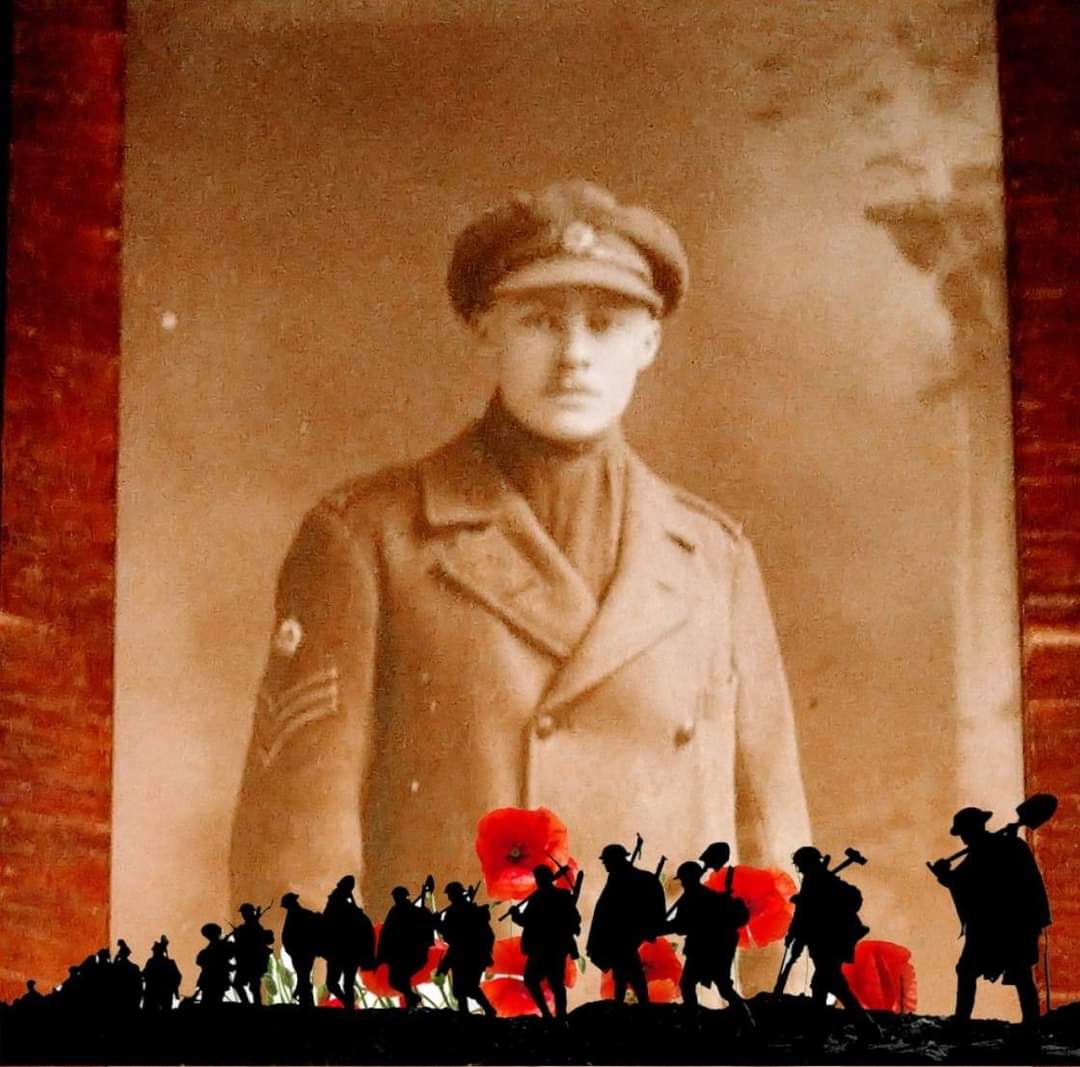
Remembering the great-uncle I never knew, Donald Young-Leslie, who enlisted Dec 30, 1914, served in the 24th Battalion Canadian Expeditionary Forces’ “Victoria Rifles” (Infantry, Québec Regiment) and was killed May 18, 1917 “in the trenches north of Fresnoy”.

Donald died one month after his, and his twin brother Norman’s, 23th birthday, and a bit more than a month after the Battle of Vimy Ridge (April 9, 1917). Vimy is important in Canadian war memorializing because it was the first occasion on which all four divisions of the Canadian Expeditionary Forces attacked as a single formation, and had tremendous success in terms of terrain, enemy soldiers and weapons captured. It was also an event in which 10,602 Canadians were injured and 3,598 died.

Donald’s name is recorded on the Vimy Memorial, and on a memorial in Picton, Ontario, but there is no known grave. France has many places with the name “Fresnoy”, within a 2 day’s march from Vimy, so it’s hard to know which one he died at. We don’t know how he was killed. Was it injuries sustained at Vimy? Was he a sniper who was killed by a bomb? We don’t know.

I’m grateful to my daughter, who went to Vimy in 2018, and found Donald’s name on the memorial.

I’m also remembering Donald’s younger brother, my grandfather Archibald Young-Leslie, who enlisted but did not serve overseas, because of spinal scoliosis. After the war, Arch had a promising career with Ontario Hydro, which he cut short, dismayed by their adoption of nuclear power generation. He found it unconscionable to use nuclear energy, after the horror of Nagasaki and Hiroshima. I wonder what he would say today, as fossil fuel created climate change makes nuclear power more appealing again.

Grateful that I have so few family to list on Remembrance Day.

Aghast that despite all these years of poppy-wearing and #LestWeForget, we still have war, atrocities, ethnic cleansing — WWII, Vietnam, Bosnia, Rwanda, Ukraine, Palestine, Türkiye, Syria, Sudan, West Papua…. 💔

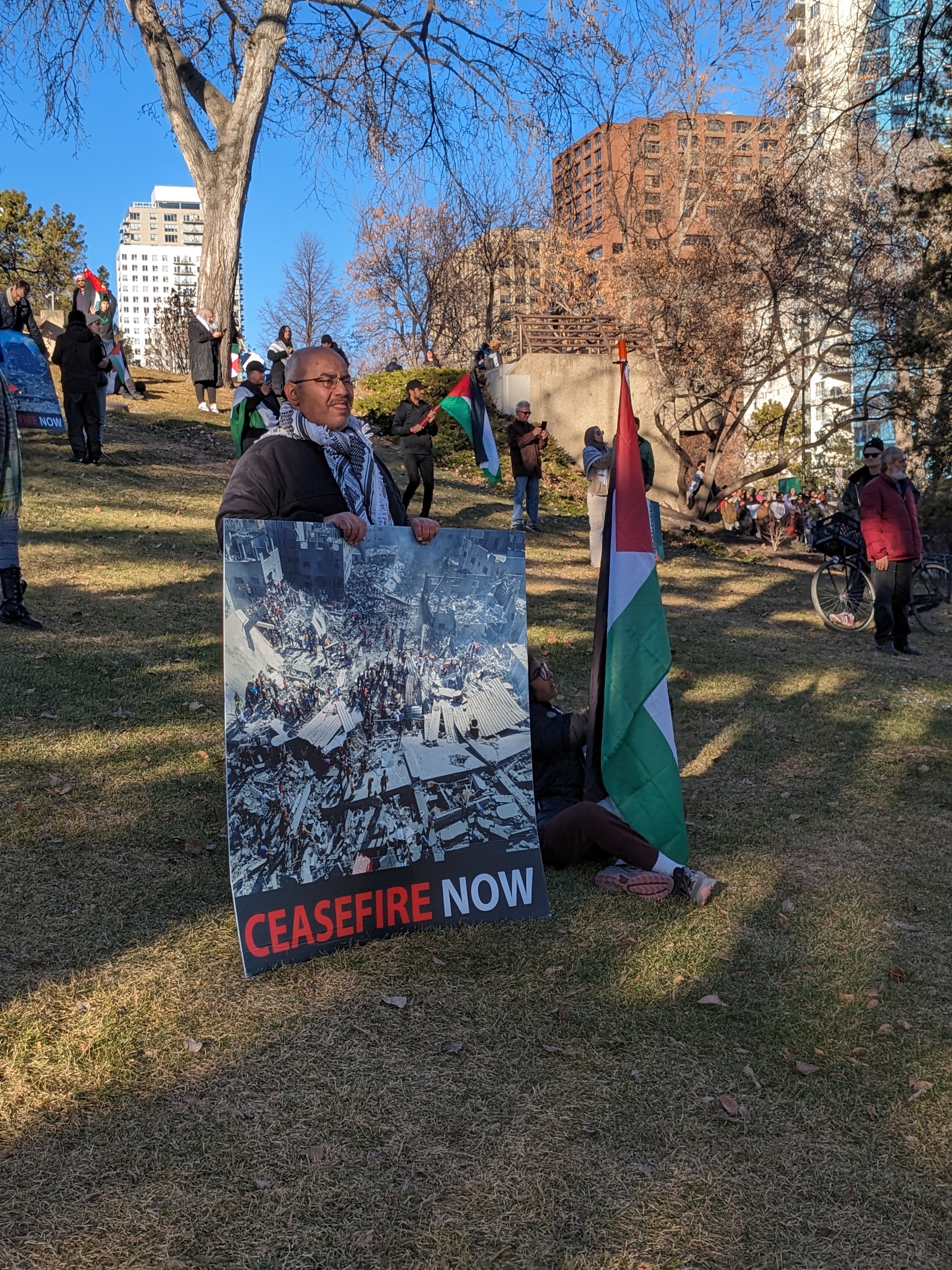
Going to the Ceasefire for Palestine rally at the Legislature tomorrow. But more for solidarity with my neighbours and public grieving than hope that yet another peace rally will be effective at swaying the decisions of colonists, Zionists, settlers, fascists and corrupt politicians like Netanyahu, or rid the world of vile organizations like Hamas and Islamic State (created as they are by that stupid decision of Israel 1948, ongoing craven self-interests, occupation, geopolitical violence).

Then I’m going to buy and read R.H. Thompson’s new book. Listen to his thoughtful, magical, optimism-generating answers to The Next Chapter’s version of The Proust Questionnaire.

Optimism Day! Getting to Fully Vaccinated Against Covid-19 (a tweeted photo essay of jab2).

June 14 2021: ANTICIPATION….


I’m at the @GoAHealth immunization clinic at 12:35, for a 13:10 appointment. Parking lot full. Queue around the building. I join the queue, take the fresh medical mask & wait. “We are serving 12:40 appointments” says the announcer. I wait. At 13:10, she invites 12:50 people. 

The queue is calm, orderly. But it’s hot & there’s not much shade. People all around the parking lot, in shade puddles, waiting for their time’s announcement. @ 13:17, she invites 13:00 (1pm) appointments. 

The queue takes approx 20 mins to move around the building. Once in the queue, some people are facing the dilemma: wait & hope the new time is announced before reaching the door? Or get into the shade?
I feel like we’ve already had the dress rehearsal for this with Dose 1. 

I’m back in my car, waiting. I’m wondering who scheduled these appointments?
It is 13:28: still serving 13:00 appointments.

Wondering: should I rejoin the queue? 

13:29: “We are serving 13:10“.

I’m back in the queue, which now is only 2 sides of the building long.

Anticipation mounting!

Queue at the vaccination clinic, June 14 2021

13:41 and I’m in the door!

Vaccination clinic entrance

It’s air-conditioned inside, which is lovely. After a shot of sanitizer gel, I’m back in another queue. I’m having airport flashbacks!

Queue in the vaccination clinic. Just like the airport, or the bank.

13:48
Checked-in! Easier than a flight, by far. I just had to confirm health card number, type of vaccine for Dose 2, address, birth date, and then it’s a third queue.

The queue divides (unzips?) for Moderna & Pfizer. I get to watch a vaccinator on casters and a helper speak to someone with their arm ready.

Patient confidentiality preserved by this photographer (not by clinic set-up)…

14:04.
VACCINATED!!
The RN of AHS refused to allow me to photograph the shot going in. Not even with her out of the shot. She wouldn’t even hold the empty syringe against my arm for a posed / faked shot. See that red spot on my freckled arm? That’s my injection site. Her technique was impeccable.

I have to wait 15 mins.
Using the time to enroll in the Covid19 Vaccine Safety Survey. It’s this, or stare at all the other post-jab people sitting in lonely cubicles.

Actually, I’m not eligible to participate. The criteria is: enrol within 8 days of Dose 1. Not accepting study participants at Dose 2.

When I had my 1st jab (at a pharmacy), I was not invited to enroll. This is unfortunate. I wonder whether it’s just mine, or all the pharmacies were not participating as recruiting sites?

14:27 Released!
Now, to see whether I’ll be one of those who experience Covid19-symptoms as my immune responders spot the novel corona virus spike protein….

June 15, 07:00
Good morning Day 1 of Dose 2 vaxed!

So far, just a very sore arm. Feels like I was punched (and, for the record, Marissa-the-Vaccinator’s technique was impeccable). 

June 15, afternoon:
Starting to feel ache-y, fuzzy brain. Is it end of a long day or am I feeling my immune response kicking in? 

Summary: Monday, PM: very sleepy about one pm, post-jab. Tuesday AM, arm felt punched, some swelling at injection. 15 hrs later: achy, skin felt tight, couldn’t focus on screens; 20 hrs= chilled, wrapped up in blankets. Wed AM= fuzzy; Wed afternoon, ok, but short of breath on easy exercise. Wed evening: AOK!!


June 28th: My #OptimismDay! Two weeks post dose 2. I’m as vaccinated as I can be.

This does not mean I will stop protecting myself & others. We have the DeltaVariant in Alberta. Fewer than 37% are fully vaccinated, as yet. Only 71% of Albertans have had dose one. So: I’ll still #mask indoors & in public where I can’t physically distance. And I’ll continue to hand-wash, while reciting the Star Trek intro.

 #FullyVaccinated

Notes From and For the Frontlines of Academic Restructuring

Originally posted 20 December, 2020 by Arts Squared. Since first published, the University of Alberta’s General Faculties Council rejected the ‘Executive Dean’. However the position was still created, just with the title “Interim College Dean”. The “interim” part of the job title fell into disuse in about one week.

This was not intended to be an essay, not even a blog post. This began as a set of briefing notes collated for colleagues at the University of Alberta, prior to the now historic General Faculties Council meeting of 7 December 2020. That was the meeting where the university’s statutory and PSLAmandated body was to consider the Provost’s proposal for academic restructuring, a proposal that included bundling faculties into “Colleges” and the creation of a new academic administrator position, that of “Executive Deans” who would lead the Colleges. In the days prior to the GFC meeting, the idea that the university might create Executive Deans was highly controversial. The role of an Executive Dean, as proposed by the Provost, would be to drive cost savings, and manage the shared administrative and fiscal aspects of the Colleges, while each faculty’s Academic Dean would manage their Faculty’s research and teaching affairs. Many members of the UAlberta community, academics, administrators and support staff alike, had reservations about the proposal for Executive Deans, but did not seem to understand what was driving this particular model for the restructure and cost-savings. These notes were my attempt to understand where the Provost’s idea of Executive Deans was coming from, and how the restructuring model was understood by those promoting it. They were also my attempt to draw on feedback from colleagues elsewhere who have experienced similar restructurings, similar governmental agendas for restructuring (austerity, reduction of public sector services), and similar, if not exactly the same, consultancy firms (i.e., the NOUS Group and McKinsey & Company). As an anthropologist, where the research goal prioritizes understanding “the other,” my approach was to begin by looking the horse in the mouth, so to speak. To do this, I read NOUS and McKinsey & Co.’s advisory and promotional materials, especially those referring to universities. That led me to read about McKinsey & Co. in greater detail. 

Executive Deans: Understanding the “transformation” and “organizational effectiveness” backdrop 

Much of the rhetoric that we have been hearing at the University of Alberta is that the university needs urgent “fundamental systemic reform,” in order to achieve the “organizational effectiveness” necessary to drive dramatic cost savings, while also “setting a bold new direction for the university of tomorrow” (see “U of A for Tomorrow”). Fundamental organizational transformation is a dramatic agenda, and UAlberta’s administration has contracted the NOUS Group to guide and manage the transformation process. The NOUS Group have a close relationship to global management consulting giant, McKinsey & Company. NOUS Group founder Tim Orton was a consultant with McKinsey & Co, and several others of the NOUS Group’s leadership came there from McKinsey & Co. (for example, directors Karen Lenane and Nikita Weickhardt, principal Gregg Joffe, and consultant Jack Marozzi appear in an easy Google search). Much of what we at UAlberta see and hear about restructuring can be traced to advice from McKinsey & Co.

McKinsey & Co. recognize that large scale organizational transformation fails about seventy percent of the time. They advise that universities often fail to transform because university leaders fail to hold the course. In their view, while university leaders may be “gifted educators, researchers, fundraisers, and academics,” they

“have little experience leading the transformation of a large, complex enterprise. Complicating matters, stakeholders often cling to deep sentiments about their institutions and their school traditions, which impedes change. And the shared governance structures at most universities makes it even more difficult to act quickly and decisively. When leaders encounter inevitable resistance, it’s not surprising that they often relent, and the project stalls, is abandoned, or becomes mired in a long implementation with poor results”. (See McKinsey, “Transformation 101.”)

In this perspective, Executive Deans are considered efficient because they evince —on paper— the “clear chain of command” that any general would appreciate. They make an organizational chart look neat and tidy. Business people speak of this “chain of command” as a way of assuring accountability. McKinsey & Co. have recommendations for “managerial spans of control” (number of direct reports) based on archetypes of managerial roles and work complexity—by time, standardization, variety, and skills needed. At the University of Alberta we are familiar with this type of task accounting in the form of the Hay points currently used to determine the ranks and salaries of administrative staff. More recently, we have been hearing about benchmarking data being provided to a company called UniForum, which UAlberta has contracted to help drive administrative restructuring and ‘savings of scale’ by reducing duplication of tasks across multiple units.

According to McKinsey & Co. the typical number of direct reports for a corporate Vice-President is three to five, and for the role beneath the V-P, six to seven. So when the Provost speaks of a scenario with a linear chain of command consisting of three Executive Deans and three Faculty Deans as his direct reports, it seems he is revealing the influence of McKinsey’s organizational thinking on his idea of the ‘right number’ of Faculties.  

McKinsey & Co. claim that “rightsizing” —i.e., changing the type of manager or spans of control— “can eliminate subsize teams, help to break down silos, increase information flow, and reduce duplication of work …. [It will also] decrease the amount of micromanagement in the organization, [and create] more autonomy, faster decision making, and more professional development for team members.”

The promise is that for UAlberta, “rightsizing” will, in addition to cost savings, offer a pathway to “nimbleness” and “interdisciplinarity,” and may be good for career growth and job satisfaction. However, is rightsizing the right process for UAlberta? And at what cost?

Executive Deans: Understanding the structural pushes and challenges

The same McKinsey article that recognizes that large scale transformation tends to fail most of the time and that university leaders have a tendency to resist such transformation out of preference for things like collegial governance, also advises that “[a] key finding of our work is that while a reasonable degree of cost management is usually necessary, it’s more important to focus on improving student outcomes and identifying new ways to diversify and grow revenues” (emphasis added). We, in the opening salvos of restructuring at UAlberta have heard little about ways to diversify or grow revenues. Frankly, in the Canadian public universities system, “growing revenues” has limited options. Our post-secondary education system was designed to benefit the public, not generate profits within the universities themselves. The profits are accrued to society, with a better educated populace who, in knowing how to think critically and analytically, are better at self-governing, bring intelligence and reflection to their roles, earn better salaries, pay more taxes, and engage more civilly. The appeal of a company like McKinsey & Co. to a government seeking to reduce spending on universities lies in its provision of “strategies . . . that can help universities reduce their dependence on the typical two largest sources of revenue —tuition and government grants.”

Ironically, while McKinsey & Co. advocate a fairly shallow organizational hierarchy with a decreased distance from senior leaders to the front line, the organizational structure they promote actually creates a bimodal hierarchy that separates the senior leadership from those who actually produce value (the professoriate), by eliminating the middle managers (Associate Deans, for example). This leaves the highest echelon free to dictate decisions (or “be nimble”) and, coincidentally, to amass the bulk of an organization’s remuneration. This form of bimodal hierarchy, and McKinsey & Co.’s position in promoting it, has recently been blamed for destroying the middle class of North America (Markovits, 2020).

The Executive Dean model involves a structural hierarchy where authority derives from the top. Loyalty is therefore necessarily aligned with the Provost, President and Board of Governors, not, expressly, with the professoriate, nor even the students of the Colleges the Executive Deans would lead. This hierarchy is expressly anti-collegial in its governance model. Anyone who has studied chiefly social systems knows that good chiefs are those who recognize their dependence on their people, and who actively redistribute wealth. But with too much hierarchy, distance from the base, limited numbers of people with direct access to the “chief” and few with similar rank or authority (i.e., with no “middle”) comes more autocratic control. In UAlberta’s case, that greater autocratic control will come from the Provost’s office. Leadership will become more top-down, even less democratic, less a cohort of peers. In other words, corporatized.  

When coupled with performance-based funding and key performance indicators (“KPIs”), we end up with no investment on the part of the senior leadership to resist the corporatized direction, and leaders who prefer to think of themselves not as academics but as CEOs. With Executive Deans we would see an expansion of the senior administrative leadership. Examples from other locales demonstrate actually this mode gainsays the goals of cost-saving and organizational effectiveness UAlberta is purportedly seeking.

I am quoting here from a recent research report on British and Australian senior leadership salaries:

The shift in the UK and Australian universities from collegial to more corporate forms of operating has engendered a corresponding shift in governance from stewardship to the agency. Professional management functions have come to the fore in the pursuit of business objectives and VCs [Vice Chancellors or the equivalent of university Presidents in Canada] both see themselves and are seen by others, including governments and government agencies, as chief executive officers. A significant uptick in V-Cs’ remuneration has occurred relative to other academic salaries. Market-based salary setting mechanisms, such as benchmarking, appear to drive these increases. (Boden and Rowlands, 2020)

See a synopsis of Boden and Rowlands’ argument in The Conversation, Australia.

The Australian and United Kingdom Experience

According to one Aussie colleague, “In Australia, the executive academics (Heads of department and up) do not teach and have no research expectations. They are contracted on a bonus based system. There is zero transparency about remuneration: nobody knows what anybody’s agreement is and there are many backdoor deals done” (Name withheld for confidentiality). My Aussie colleague describes this as another way of undermining any collegiality.

With Executive Deans, in fact all of the senior leadership, unless the executives’ performance indicators and budget structures are carefully wrought, there is little in the way of structural mechanisms to keep Executive Deans from becoming more like Provosts, less like colleagues, not even Deputy Provosts or Associate VPs. Boden and Rowlands (2020) recommend “maximum fixed ratios between vice-chancellors’ remuneration and average academic salaries.” But who in the UAlberta structure would or could make that happen? The Provost? Not the Executive Deans. It is doubtful that even this Board of Governors, despite their concern with austerity, would adopt that remuneration model.  

Following from the McKinsey & Co. material on Chief Transformation Officers, and the experience of academic restructuring in Australia and the UK, Executive Dean positions will be filled by executives who have ceased to be primus inter pares (first among equals) and have become, rather like university presidents in Canada are now, former academics who behave like corporate CEOs. With that, there is great risk that Executive Deans will became more and more expensive. 

The expense of Executive Deans will not necessarily be because they are great managers for their institution, colleagues, and students. Research from the UK has demonstrated that managerial efficiency fails as a determinant of Vice-Chancellors’ remuneration. Factors like student participation and research grants success don’t explain the remuneration increases either. See Bachan and Reilly, 2015. Surprise, surprise, age, size, and reputation of the institution are more reliable predictors of V-C pay. See Virmani, 2020.

With performance measures that focus on annual rankings and corporate fund-raising rather than faculty, staff and student satisfaction, you end up with a cohort of executives whose career path is not based on growing within a university community to which they are dedicated. Instead, these senior academic administrators flit from one university to another, increasing their remuneration as they move up the ladder in terms of institution reputation and size. (That’s one way to understand the imperative to “be nimble.”)

The Outlook for University of Alberta for Tomorrow

Whence will come the cost savings UAlberta needs? They’ll come from draconian measures, such as vertical cuts, but beginning with cuts of academic teaching and support staff positions, and downward pressure on the professoriate via managerial mechanisms such as the Faculty Evaluation Committees, algorithms that determine academic performance, and Key Performance Indicators. A colleague shared a real prof’s workload evaluation spreadsheet, from a major Australian university. I’ve redacted the name.

Academic Workload Evaluation Sheet (Australia)

My colleague sent the Australian prof’s workload summary with this note:

Hi Heather,
This was provided by a colleague. Read and weep.
Note in the research tab how different research publications are weighted as “points”. A minimum number of points must be achieved each year or the algorithm under the teaching calculation is changed to ensure additional teaching hours are performed. So for an ordinary senior lecturer (not a prof) to keep your research allocation at 40% (a typical 40-40-20 workload distribution) you would need to produce 7 research points a year – that is 7 book chapters, or 1 book and 2 chapters, and so on. A prof would be expected to achieve 11 points – so two books and a book chapter. Obviously none of this is sustainable if even possible. So the effect is that everybody does a LOT of teaching (70-10-20)…
This is what is really meant by “performance-based” universities.
Cheers
[name withheld]

Buzzwords Decoded

It is unfortunate that two wonderful concepts—nimbleness and interdisciplinary— have been captured by the Provostial rhetoric and transformed into buzzwords.

“Nimbleness” is code for the freedom to expand the precariate and make vertical cuts.

“Interdisciplinarity” is code for merging departments.  

Recently, those of us observing the UAlberta’s Board of Governors’ meeting on 11 December 2020 were offered another buzzword to consider: “Laser focus.” This is less difficult to interpret. Laser focus is code for relentless inflexibility, autocracy, and hatchet-wielding, all in the name of KPIs. Actions associated with laser focus include denying collegial governance, breaking collective agreements, pitting departments and colleagues against each other, creating chilly workplaces, and hailing the hatchet-wielding executives with titles such as “Chief Transformation Officer.” 

The McKinsey Touch

Look soon to see McKinsey-inspired expansion of the mandates for the Board of Governors.

For more background on McKinsey & Co. I recommend Duff McDonald’s The Firm (2014), and investigative journalism in The New York Times and The Independent

After learning all this, I have one or two questions more. Why is it that management consulting firms only offer universities one model for organizational effectiveness, leadership, and transformation, a model based on a capitalist corporation? Instead of accepting a huge failure rate in transformations, why not offer universities an organizational structure more similar to what a university is? Yes, our university has to change. But does it need to be corporatized? Why aren’t our current leaders demanding —of themselves— expertise, higher degrees, MBAs even, in co-operative managementWhy are they not demanding of the consultants they hire —NOUS, McKinsey— something that respects the collegial governance system and its longue durée of successful production and sharing of innovation, creativity, critical thinking, and knowledge?

The answer to these questions may lie far from the Alberta prairies, at Harvard’s Business School.

Finally, for more on McKinsey & Co, listen here:

The Flygskam Scam

In reading and thinking about my eco-anxiety, I’ve recently learned of a Swedish neologism that describes a new way of thinking about air travel: flygskam: flight guilt. I expect that like hygge, flygskam will soon be a part of the English lexicon. Because so many of us have eco-anxiety. Which is definitely not hygge.


Flygskam

Flygskam :: Flight guilt 

 
Back when I was teaching my Theory in Anthropology courses it was challenging but not impossible, in the early 90s, to get students to imagine a society where the rules of capitalism did not pervade *all* actions, choices, perspectives. World systems theorists  from the late ’70s (eg: Emmanuel Wallerstein and Jane Schneider) and ethnographies from Oceania helped enormously, as did my own insights from participant observation and research in Tonga. But by the ’00s, it became harder and harder to get students to that place of intellectual flexibility required to recognize other, non-capitalist social systems, other social-economic formations, as viable, as really real.  While the originally contested concept of ‘culture’ as constructed by anthropologists became so mainstream that I could spend less time teaching what ‘culture’ was, recognition that non-capitalist relations to the environment and other species did exist became harder and harder to achieve. Maybe I became a poorer professor, but for me, students struggled more and more to think without capitalism as the default for society.
It is axiomatic in anthropological theory that it is difficult to ‘see’ [think\imagine] without one’s cultural lens affecting one’ perceptions. That axiom is the core of the participant-observation methodology, the idea that living as others live provides an avenue for seeing and thinking with a different cultural world view, leading to an appreciation and valuing of differences and  possibilities for critiquing one’s own status quo. The method works. 
But, as globalization pushed, and capitalism –as neoliberalism– achieved further, wider, deeper, capillary and rhizomic relations, I struggled to find ways to describe social formation alternatives to capitalism that didn’t sound to students like othering of indigenous peoples, or romanticized history, or science fiction. Despite my commitment to the ethnographic method, and Paul Mason’s work on post-capitalism aside, it seems to me now that literature –Ursula K. LeGuin, Margaret Atwood, Octavia Butler– is possibly the best avenue for reflecting on alternatives to a capitalist mode of ecosystem-destruction relations, simply because globalization and neoliberalism has completed the colonial plot. There are no contemporary sample societies to point to as unaffected, materially and culturally –not my beloved Tonga– by capitalist modes of production, by what Greta Thunberg neatly described as “fairy-tales of eternal economic growth“. Not even the famously xenophobic Sentinalese of the Andaman Islands are unaffected. Else why would they have the highly effective defense system that resulted in a wanna-be missionary’s death?
 
Eco-anxiety abounds, even among those who do not recognize they have it. It constantly surprises me that so many people think rivers are for viewing, maybe boating on, maybe fishing from, on the right day, in the right place (but catch and release or beware of how many you eat; avoid the belly fat, where the heavy metals concentrate). The default thinking of a river is not as something to drink. Unless with filters and purification tablets. Or in an emergency. It wasn’t always like this. I have lived with, I remember, environmental beauty appreciated via sight, smell, sound, feel, and yes, taste; without eco-anxiety. 
 
This is what I’m pondering, with my 3:30AM jetlagged brain, as I read Naomi Klein saying: “the fact that for so many people it’s so much more comfortable to talk about our own personal consumption, than to talk about systemic change, is a product of neoliberalism, that we have been trained to see ourselves as consumers first”.
 
Winter is here, but I can’t be hygge because I have flygskam. But my flygskam is not really a product –in the foucauldian sense– of my eco-anxiety. My flygskam is an indicator, evidence of another axiom: that capitalism atomizes. It induces us to think and respond and benefit as lone individuals, not as interconnected members of a system.  Capitalism works,  insidiously, to disguise it’s own capillary power, and to normalize those who control the capital that influences the global political, economic and social options and actions that are causing the climate crisis (while also exacerbating racism, sexism, poverty, disparity, war, alienation of indigenous lands, etcetera). I’m supposed to feel my flygskam on my own, rather than notice the scam, and scammers, that it signifies. That’s the capitalism mode. 
 
Is there a Swedish (or Sentinalese, maybe?) word for the anger I feel towards those who are blocking the systemic changes we all need to preserve this planet’s ecosystem? I want it; need it. 
November 12, 2019.
Some interesting links:
Capitalism:
Mason, Paul [2015] PostCapitalism: A Guide to our Future. Wikipedia summary: https://en.wikipedia.org/wiki/PostCapitalism:_A_Guide_to_Our_Future
Schneider, Jane [1977] “Was There A Pre-Capitalist World-system?” Peasant Studies 6:1:20–29.  Find it here: https://www.irows.ucr.edu/cd/books/c-p/chap2.htm
Wallerstein, Immanuel [1974] The Modern World-System, Vol. 1: Capitalist Agriculture and the Origins of the European World-Economy in the Sixteenth Century. New York: Academic Press.
Ethnographies:
Burawawoy, Michael [1979] Manufacturing Consent: Changes in the Labor Process under Monopoly Capitalism. University of Chicago Press
Weiner, Annette B.  [1979] Women of Value, Men of Renown : New Perspectives in Trobriand Exchange. University of Texas Press
Hygge:

December 6, 1989 & 2017; The Resilience of Violence, 2.0

MeTooUpdated from a 2015 post:

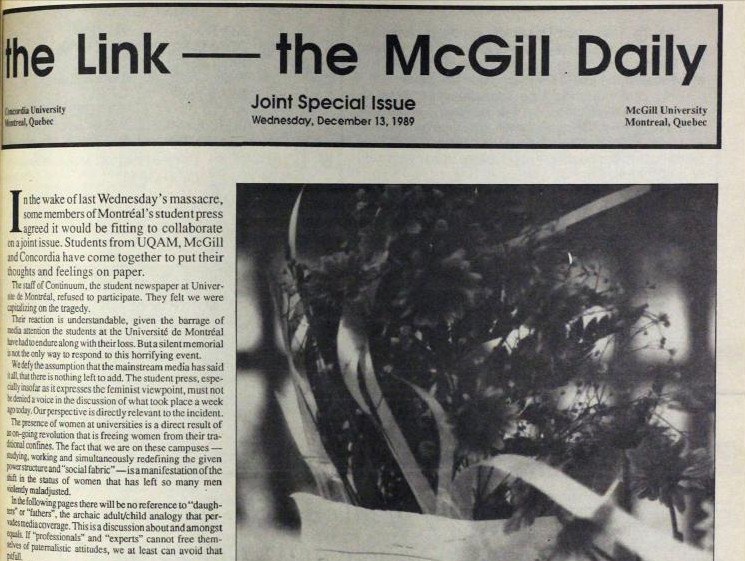
28 years ago today; I was pregnant, happy, optimistic for my child, who was being born into a world that had just breached the Berlin Wall. It seemed like peace was breaking out all over. And then, Dec 6. Montreal. L’Ecole Polytechnic.

It was a terrible shock. Not just that a single shooter would attack students at a university. But that he would specifically order classes to separate into groups of male and female, and then shoot, murder, slaughter, the women only. And then repeat in other classes.

Suddenly, the entire nation, was confronted with a terrible truth: as people listened to the reports, some realized they’d momentarily expected -and accepted- the idea that the shooter might separate the victims by sex, so that he could shoot the men. That he targeted the women was a surprise, an affront.

The tragedy of L’Ecole Polytechnic gave Canadians a double shock: We realized our attitudes to violence had been blunted by patriarchal assumptions that included the horrid acceptance that males were legitimate targets for violence. Equally, our understanding of violence against women had been dismally, willfully, complicitly, naive. The value of feminism as a necessity, even as it was being described as the murderer’s motivation, was confirmed.  The optimism of Berlin was washed in the horrors, the guilty insights, of Montreal. 22 days later, I gave birth to a daughter.

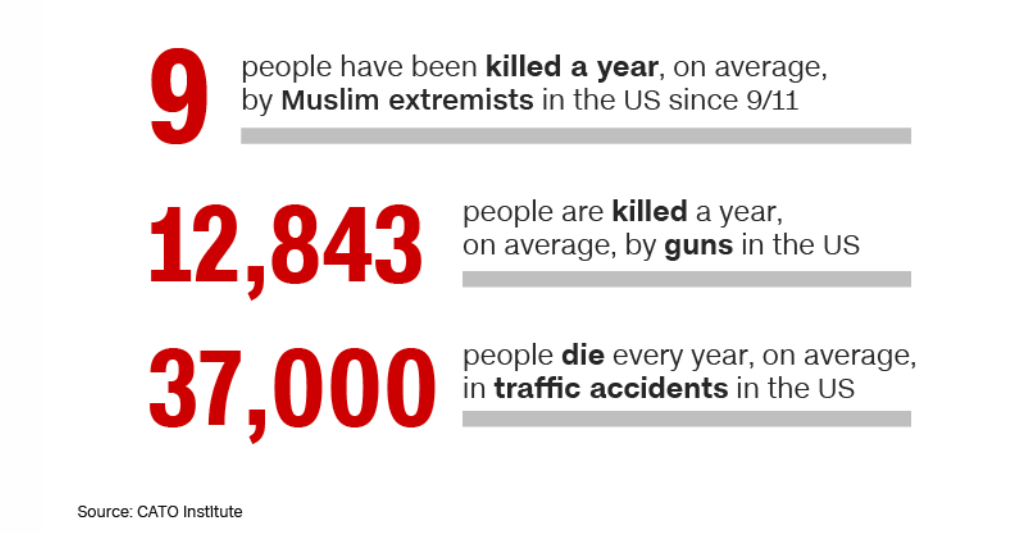
Now, 28 years on, we have Murdered and Missing Indigenous Women and Girls (& men), and Black Lives Matter, because people of colour are vastly more likely to be killed by the state, or have their deaths ignored by the state. We have the campaign, and Time Magazine has declared the “Silence Breakers” to be their Person(s) of the Year, because so many women are OVER being sexually harassed or assaulted (or both). Violence Against Women has been raised to iconic, professionalized status. It is now possible to use the acronym of VAW and be widely understood while condemning patriarchy, the ubiquitous and resilient inequities between sexes, and while arguing for services, policies, legislation, and/or education to mitigate VAW. Good steps have been taken. But not enough, else all the women – myself included – who wrote #MeToo on our social media, and the Silence Breakers would not have had any silence to break. But just as bad is the fact that unlike in 1986, when it seemed like peace was breaking out all over, we have violence expanding: wars in Syria, Yemen, refugee crises in Europe, North Africa, and most recently Myanmar and Bangladesh (and not enough being said about the violence in refugee camps and the trafficking of child refugees), the violence in Mexico… it has only been a year since  Americans voted in a man who bragged about his history of sexual harassment and assault. Now they are about to send another multiply-accused pedophile to the Senate.  While the USA has banned immigrants from predominantly Muslim nations on the grounds of violence-prevention, they have themselves allowed an average of 12,843 people to be murdered with, and another 20,000 (average) to suicide with, a gun. TerroristsVsGuns-USA

Violence, is resilient.

As I wrote in 2015, in the first version of this post, acceptance of violence itself has not moved on much from the guilty horror of 1989.  Mothers’ children continue to be slaughtered. Today, as every Dec 6, I condemn the craven political decisions that permit the means for violence; I mourn for those mothers who suffer the catastrophe of violence against (or by) their child, and offer a grateful whew to the luck goddess that I am not in their cohort.

[Image credit: The European Danse Macabre, Alberto Martini, 1915, via @LibroAntiguo ]

Failing The Moral Test: Canadians Must Redress Our Nation’s Abuse Of Children

the moral test of government is how that government treats those who are in the dawn of life, the children*

On Valentine’s Day, 2017, Justice Edward Belobaba of the Ontario Supreme Court ruled that the Canadian government breached agreements and failed in its responsibility to indigenous peoples, for its part in a child-welfare program that saw thousands of Ontario’s children removed from their parents, communities and cultures. Now referred to as the “Sixties Scoop”, between 1965 and 1984 some 16,000 children deemed by provincial social workers to be ‘at risk’ were apprehended from their parents and communities, then fostered or legally adopted by non-indigenous families. The Ontario protocols became the template for other provinces, ramifying indigenous families’ distress across the country. In many, possibly most, cases the parents who had their children apprehended were themselves victims of a prior form of state-sanctioned kidnapping and enfranchisement: the residential school system. If the parents were not themselves survivors of residential schools, perhaps suffering the now-recognized symptoms of PTSD or abandonment trauma, they were likely subject to poverty, poor education, underemployment, and the generalized public discrimination and ‘anti-Native’ racism that was the default in mainstream society until very recently.

During the Sixties Scoop, even if a social worker was not stigmatizing indigenous parents and children, and was trying to apply child welfare guidelines evenly to all cases requiring intervention, the parenting assumptions penalized at the very least poverty and denigrated non-European (WASP) traditional practices. Consider these scenarios: A mother of English or French or German ancestry could buy Woodward’s Gripe Water fromgripe-water the local pharmacist and use it to sooth her cranky infant. A mother of Cree, Mohawk or Anishnaabe ancestry who made a tisane including dill or fennel, sugar, baking soda, and watered gin could be accused of providing alcohol to a minor, be declared unfit as a parent, and have her child removed. Yet commercial preparations of gripe water had an alcohol content ranging from 3.6% to as high as 9%, even into the early 1980s (Blumenthal, 2000). A case of domestic abuse with a white family would see the police either ignore a woman’s complaints and leave her and her children with the abuser, or help them get to a shelter; with an indigenous family, it could lead to seizure and permanent removal of the children from their entire extended kindred.

It was the mundane level of hypocrisy, the willingness to assume that indigenous cultures’ parenting practices were by default inadequate and dangerous relative to ‘modern’ mainstream (a.k.a. white) society, and the wider implications and ironies of that attitude, that spurred me to write the following letter, in 1998, to Michael Enright and Avril Benoit of CBC Radio’s This Morning:

Date: Mon, 23 Mar 1998

To: thismorning@cbc.toronto.ca
Subject: Spock’s influence

As a mother and a social anthropologist specializing in mothering and the influences of North American medical personnel in everyday life, I listened with interest to your panel of four mothers discussing their use (and non‑use) of Benjamin Spock’s Baby and Child Care [originally published 1946]. Sheila Kitzenger and Sherry Thurren were also interesting, especially in their discussions of the context of maternal advice at the time that Spock was writing: his book was indeed a revolution for its time, in that it confirmed a mother’s abilities to handle situations, and advised a less regimented, disciplinary form of baby care, with more expressive loving from parents. However, the one question I kept expecting to come up was never asked:  “When everyone else in the medical establishment was advocating discipline, routine, formula over breast-milk, and telling mothers that they needed a doctor’s advice for all aspects of an infant’s care, where did Benjamin Spock get his path-breaking ideas?”
The answer would have been somewhat surprising, certainly to the thousands of American and Canadian families who do not know that the revolutionary child care advice they faithfully followed, and thought of as resulting from North American medical scientific breakthroughs, was in fact heavily modelled upon Polynesian and other First Nations’ child rearing practices. Benjamin Spock’s ideas came out of anthropology, not medicine.
Benjamin Spock was the pediatrician to the famous anthropologists Margaret Mead, Gregory Bateson and their daughter Mary Catherine. As your listeners may know, Margaret Mead’s first book, Coming of Age in Samoa [1928], focused on child rearing in Polynesia. She later did similar research in North America and other parts of the Pacific as well. Mead was tremendously influential in areas of social policy in the USA from 1928 to after WWII, but not all of that influence was overt. As her daughter later wrote about Mead: “Margaret’s ideas influenced the rearing of countless children, not only through her own writings but through the writings of Benjamin Spock, who was my pediatrician and for whom I was the first breastfed and self‑demand’ baby he had encountered” [from With A Daughter’s Eye, 1984, William Morrow & Company, Inc].
It is ironic that the great influence aboriginal peoples have had in contemporary North American cultural and medical practice has been so disguised. But there is an even greater irony here:  while at least two generations of white, middle class parents were following re‑packaged aboriginal people’s parenting practices and choosing to nurture and indulge their children for the sake of their good psychological development, First Nations parents were being forced to send their children away to residential schools: There, aboriginal children were subjected to the very discipline, authority and cold regimentation that Mead and Spock helped to discredit.
And we now have the temerity to ask why so much psychological damage is rampant in some First Nations communities, and how is it our concern!

sincerely,
Heather Young Leslie

I wish I had been more forceful in my 1998 letter. I wish I had spoken of racism, tragedy and abuse rather than ironies. At the time, I feared a more candid letter would not be read on air. It has taken so long for an appetite for the truth about generations of Canadian state-sponsored violence against children and families to come into the general discourse (even now, I suspect it is only the liberal-Canadian public who are paying attention). When Justice Belobaba agreed with the complainants that the Sixties Scoop resulted in widespread psychological traumas for the children, their extended families and communities, leading to psychiatric disorders, unemployment, violence,  incarceration and suicide, he was affirming what Indigenous-rights activists have been saying for a very long time, often to deaf or uncaring ears. Yet beyond the thousands of individuals, mostly children, harmed, entire Indigenous nations have suffered as generation after generation lost fluency in their languages, ability with ceremony, technical making and survival skills, intimacy with traditional territories and kinship networks; many simply died. Colonialism and colonization is war that never stops killing.

Although Canada as a nation has engaged with the recent Truth and Reconciliation Commission‘s investigation of the residential school system, and now publicly seeks ‘reconciliation’ with Indigenous peoples of Canada, and while our Prime Minister has promised to honour treaties and enact a ‘nation-to-nation’ relationship, there is much that has yet to happen before true reconciliation can happen.  While Carolyn Bennett, the current federal Minister of Indigenous and Northern Affairs, has publicly stated that the federal government will not appeal Justice Belobaba’s ruling, her Ministry has spent millions vigorously applying every loophole they could to refute another child welfare case, this one brought to the Canadian Human Rights Tribunal, regarding the Government of Canada’s deliberate unfunding and policy blocking of First Nations Child and Family Services. The Tribunal’s Decision was that Canada, via the Ministry of Indigenous and Northern Affairs, is purposefully discriminating against “163,000  First  Nations children  and  their   families   by  providing  flawed  and  inequitable  child  welfare services to  First  Nations  children and by allowing  jurisdictional  disputes  between and within governments to cause First Nations children to be denied  or experience delays  when  seeking  to  access  essential  government  services available  to  other children“. Despite claiming to welcome the Tribunal’s Decision of January 26 2016, Carolyn Bennett’s Ministry continues as of Feb 2017, to be non-compliant with the legally-binding ruling of the Tribunal. Further, she is speaking about trying to avoid a court-mandated settlement in the Sixties Scoop class action. The 16,000 complainants have requested damages of $85,000 each, less than one year’s middle-class salary, for a total of $1.3B. Prime Minister Justin Trudeau’s Cabinet and Finance Minister Bill Morneau have not, as yet, prioritized indigenous reconciliation and fair costs for federal responsibilities in the budget for 2017. 

Most Canadians do not know we are all “Treaty People“, nor how much has been taken from our treaty-partners, how much loss, pain and trauma still reverberates, though I think most people can empathize with having a grandparent or spouse with PTSD, with the fear of loosing one’s home, or the horror at the mere idea of having a child kidnapped, disappear, or commit suicide. While there is much resilience and goodwill within Canada’s Indigenous communities, there is much understandable anger and resentment too. The solution goes beyond the political will to admit wrong-doing, apologize and budget the true costs of complying with historic treaties and Supreme Courts’ and Human Rights Tribunal findings, though those are essential measures. There is reaching out by everyday Canadians to be done too.  A good place to begin is to learn what it is we don’t know: even those who say they are allies of Indigenous peoples, are supportive of the reconciliation cause, or are anti-racist, can learn more, and should.  This is a scenario where what you don’t know can hurt someone, probably a child and or her/his family.

I have three recommendations to start you off: The first is that all Canadians, young and old, multi-generational settler-descendent to first generation immigrant to refugee, read the Truth and Reconciliation Commission’s  reports, especially their Calls to Action. The second is to view the National Film Board‘s We Can’t Make the Same Mistake Twice, Alanis Obomsawin’s latest documentary, which follows and makes easy to understand, the many-years history of the Human Rights Tribunal’s hearings and eventual findings. The third is to take the University of Alberta’s online course Indigenous Canada (enrolment begins March 2017; it’s free to audit, cheap to get a certificate). These are things that Community Leagues, Rotarians, Lion’s Clubs and other service organizations, book clubs, walking and yoga groups, church parishes, curling and hockey and baseball teams can do together. These are easy initial steps to reconciliation that all non-Indigenous Canadians can, and should, take.

That’s not the end of course. We all must know and agree to respect the Treaties that the nation-state of Canada is built on; learn what is in the treaties governing where we live now and where we were born (if there even is a treaty), lobby our provincial and federal governments to stop asking First Nations for just a bit more of their land, water  and wildlife habitat. A “nation-to-nation” relationship is like consenting to sex: “no” must be respected; it doesn’t mean “Try harder to convince me” or “If you say no, we’ll just take it”.  In general, we must be mindful of the place we inhabit, and what impact our actions have on our treaty partners, wherever we live. This is going to be tough for those who have benefited from privilege and not had to recognize treaty responsibilities, certainly. Reconciliation is a long, slow, multi-party process. It requires so much more than “I’m sorry”.  Now is the time for the non-indigenous peoples of Canada to paddle the boat. Because, to recycle a saying from my youth: “If you’re not part of the solution, you’re part of the problem”** and this problem is one that persists in abusing children and their families. That’s not what we mean when we proudly exclaim our “Canadian values”.


*Hubert Humphrey. Remarks at the dedication of the Hubert H. Humphrey Building, November 1, 1977.
**Eldridge Cleaver. Presidential candidate speech at UCLA, April 10, 1968 (Listen at 51:05 mins), also speech to the San Francisco Barristers’ Club, September 1968.

A Screed* for 7/7/16

Police violence at a #BlackLivesMatter protest in New York City. Overshadowed by a different sort of violence, a vigilante-payback murderous sort of protest, in Dallas.

Heartbreak. Horror. Anger. Shock. 

Obviously, there will be lots of palaver about what needs to change. Gun culture for example. Prosecuting those who abuse the power of their position, who fail to serve / protect. Training (re-training) (better training) (anti-racism-training) of police.

And maybe before the training,  recruitment, but:

How to entice better recruits? What sane person wants to work in a racist, sexist, phobic organization?

And while we in Canada may subtly congratulate ourselves for not having the (scale of) problems that they have in America, let’s not forget we too have discrimination and sexism

Our RCMP are but one recent example.

*A Screed is a song of protest, of vilification. 

The Lost Jingle Dress

img_2031-1The Lost Jingle Dress is my first ‘published’ piece of creative nonfiction. The story lauds the small, tight-knit community of Jasper, Alberta. I wrote it in 2014, and it was performed by Stuart McLean in 2016 for the CBC Radio program Vinyl Café. It aired in the story exchange segment of the “Indigenous Music” episode of June 3 & 4, 2016.

Stuart McLean’s performance of The Lost Jingle Dress is archived in the Education and Research Archive of the University of Alberta’s Libraries, here. Forgive the amateurish sound production. This version was recorded from the public radio broadcast onto a private-owned iphone 5 in m4a format.


Myths perpetuated by the Ghomeshi trial (re-blog)

(Re-blog from PressProgress.ca)

A Toronto court heard final arguments Thursday in the trial of former CBC Radio host Jian Ghomeshi.
Ghomeshi is charged with four counts of sexual assault and one count of choking to overcome resistance related to allegations brought forward by three female complainants.

While the defendent’s guilt or innocence will be determined by a judge based on evidence presented in court, Ghomeshi’s defence strategy has been widely criticized, with suggestions the aggressive cross-examination of witnesses in the high-profile trial is revictimizing the complainants and discourages women from reporting sexual assaults in the future.

Now, some question if Canada’s criminal justice system is “structurally ill-suited” to deal with sexual assault cases?
Here’s what experts and observers have to say about five of the more dangerous myths the Ghomeshi trial has pushed into the public square:

1. “Consent can be implied, retroactively”

Throughout the trial, Ghomeshi’s lawyer, Marie Heinen, has sought to raise doubts about the relationship between the complainants and her client after the alleged assaults took place.

In all of this, Macleans’ Anne Kingston observes, “the defence appears to be trying to establish some sort of retroactive implied consent, which, of course, is moot: at the time of the alleged assault, the future hadn’t occurred.”
However, Canadian law is quite clear that this is ultimately irrelevant to the issue of ‘consent’.

“If you examine this [Ghomeshi] trial,” says University of Ottawa law professor Constance Backhouse, “basically because the victims gave consent to some things — before, during and after the alleged non-consensual behaviour — we’re all making assessments that they are not believable about the non-consensual part.”

And in the eyes of the law, none of this may matter: “the Supreme Court has said that a person cannot consent to an assault that causes bodily harm,” says University of Toronto law professor Brenda Cossman. “If a sexual activity causes bodily harm, a person cannot consent to it.”
Recent polling done by the Canadian Women’s Foundation found that while 96% of Canadians agree sexual activity between partners must be consensual, over two-thirds of Canadians (67%) do not understand the legal definition of ‘consent’.

2. “Survivors go directly to police after an assault”

Heinen also questioned why one complainant did not go directly to police after the alleged assault.

“I didn’t go to the police because I wanted to go home,” the woman answered. “I didn’t go to police because I didn’t want – this,” referring to testimony before the court.

That response is consistent with statistics on sexual assaults in Canada. In 2014, Statistics Canada reported only 5% of all sexual assaults in Canada are reported to police.

“Sexual assaults perpetrated by someone other than a spouse were least likely to come to the attention of police,” another report from Statistics Canada adds, with “nine in ten non-spousal sexual assaults were never reported to police.”

3. “Survivors never go back to their abuser”

Heinen introduced evidence suggesting one complainant’s contact with Ghomeshi after the alleged assault challenged the credibility of the allegation itself.

This isn’t necessarily surprising, experts say. Survivors of abuse typically “manage the violence” through a range of responses to a traumatic experience, including “denial” and “self-blame” before they actively seek help.

“Many leave and return several times before their final separation,” reads literature prepared by the BC government for victim service workers. Some reasons include emotional attachments to the abuser, emotional abuse, threats or fears of continued violence, social and cultural pressures, or financial dependence, to name only a few.
As Keetha Mercer of the Canadian Women’s Foundation told Chatelaine:
“There are many reasons why a survivor would contact her abuser. These may include wanting to get closure or addressing what happened. Many survivors struggle to break off contact with their abuser because the nature of abuse includes undermining their self-esteem and confidence. They may feel controlled by their abuser, which is a hard feeling to shake even after they have left.”

4. “Women lie about being sexually assaulted for fame and attention”

Ghomeshi’s lawyer suggested one complainant’s allegations were motivated by fame and attention, stating she was “reveling in the attention” and pointing out how her number of Twitter followers had “skyrocketed.”

Except the trial process is arduous, often re-victimizing survivors. And as Toronto lawyer David Butts points out, the current system is “basically trial by war,” so who would volunteer to put themselves through such a distressful process?
“That is probably the worst thing to do to complainants who are coming forward to talk about very intimate and distressing violations of their sexual integrity … Moving away from an adversarial model, I think, is going to be necessary because look at the Ghomeshi trial — who would voluntarily put themselves through that?”
Not only that, but only 42% of sexual assault trials end in a conviction. 47% see charges stayed or withdrawn.

5. The stereotype of the “perfect” victim 
Ghomeshi’s defence has also attracted criticism for its “extreme focus on inconsistencies” in the complainants accounts of events, “including information that may appear to some as irrelevant,” and using these to suggest complainants are stricken with “false memories.”

Macleans’ Anne Kingston says this strategy of asking “very personal questions” is “pretty extraneous but just poked holes in issues that should have nothing to do with the charges at hand.”

“It’s totally irrelevant to whether she wanted to be punched in the face,” says UBC law professor Isabel Grant, who says the focus on inconsistencies is irrelevant to the issue of consent, but instead plays into stereotypes about women’s sexuality.

Canadian novelist Kathryn Kuitenbrouwer observes that Heinen’s cross-examination implies “that the woman has to be this hygienic, innocent, perfect bystander in these cases” – constructing an impossibly unrealistic image of what a credible victim looks and sounds like, irrelevant of the facts of the case.

“She seems to articulate that they wanted it, that they produced the violence,” Kuitenbrower adds. “And then when it happened, they came back for more.

 Tags: #Sexual Assault Against Women #feminism #Jian Ghomeshi #gender equality #Criminal courts

Source:

http://www.pressprogress.ca/5_dangerous_myths_about_sexual_assault_perpetuated_by_the_jian_ghomeshi_trial

Smoke + Mirrors: Marie Henein’s lawyerly tactics in defense of Ghomeshi

[Feb 9, 2016. Some thoughts on the Ghomeshi trial, as the third complainant’s testimony and examination is completed, and as we wait for Judge Horkins to rule on admissibility of a fourth witness]

We knew that the complainants alleging assault and other charges against Jian Ghomeshi would face severe, rigorous questioning intended to discredit their testimony, from highly credentialed and skilled lawyer Marie Henein. As a dear friend and one-time courts reporter has pointed out to me, society needs this to happen. We want a defense lawyer to be vigilant and ardent; a person’s liberty is at stake. We don’t want to live in a society where a state lawyer does not have to prove beyond a shadow of a doubt that an accused should be convicted.

However there is questioning to discredit testimony and there is “whacking”. The latter is a nefarious tactic which occurs almost exclusively in sexual assault cases. It depends on aggressive, verbal accusations, double-negatives and sexist stereotypes. The goal is to confuse and intimidate a witness so that what they say isn’t what they mean or want to say. There are many who are questioning the ethics of this tactic, noting that it is something that, like torture, fails to provide actual truths. Whacking also depends on the legal system’s assumptions that linear, chronological testimonies can be elicited from participants in traumatic events and that such ‘clear’ testimonies are more credible. Therefore, if a witness’ verbal re-telling of a traumatic event can be deconstructed, it is likely false, or exaggerated. This expectation is based on false assumptions rather than research evidence about how traumatic memory actually works and how women often react during assault. It depends on negative stereotypes about women and victims of sexual assault in particular.

So, to recap, whacking is a courtroom tactic of intimidation particularly popular in defense of sexual assault, which is intended to discredit a witnesses’ and complainant’s testimony.

Ghomeshi’s lawyer, the brilliant and fearless Marie Henein, is renowned for her whacking skill. In the Ghomeshi case however, I think Henein’s intention is to do more than just discredit the testimony through intimidation. There seem to be three key legal points that the case hinges on (I’m not a lawyer, but this is what I understand from reading the criminal code, and various pundits and researchers): First, was the violence consensual, from the beginning and during; second, is there a pattern, i.e.: ‘similar facts’ that can be permitted to weigh in a verdict; third, were the ‘serious harm’ actions really severe enough to be the kind of harms our criminal code says we cannot actually give consent to? I think what lawyer Henien’s strategy is a five-part smoke and mirror trick designed to address these three points of law, and one point of judicial hubris:

1) She is trying to imply that Lucy Decoutere and the two other complainants gave on-going consent, that they welcomed and therefore participated in the hitting, choking, hair-pulling, etc. This is intended to distract the judge from the point that there is no evidence of prior consent in the first instances.

2) She is trying to prevent the judge (and public) from recognizing and believing the complicated psychology of how the brain reacts to and processes trauma, including how women post-assault may seek approval from the aggressor or try to remediate a sense of  their unacceptable ‘victimhood’ by choosing ‘participanthood’ post-hoc. This does not gainsay the fact that prior and/or on-going consent had to have been given, and that failure to deny consent is not the same as giving consent.

3) Significantly, Henien seems to be trying to elide the point that Canadian law doesn’t actually permit us to consent to serious harm.

4) She is also trying to circumvent the ‘celebrity as authority figure’ factor that Ghomeshi represented for the complainants: the fact that he was a highly regarded personality with influence in the media-arts-entertainment industry and the women were in early-career stages with aspirations in that business meant that Ghomeshi’s actions were extra compelling, in both his potential and effect as a perpetrator. He had the glamour (in the old Celtic sense of disguising evil with beauty). I wonder if Monica Lewinsky might not have something to say about the complicated emotions that happen when one thinks of one’s idol as a friend, or even romantic partner?

5) More speculatively however, and this is where the mirrors become truly smokey, I think Henien is playing a long head-game with Judge Horkins. I think she is trying to trade on the rather fuzzy boundaries as to what actually consists of consentable sexual violence, and to push the judge into fearing making a ruling that establishes a new precedent, but could be overturned on appeal. Judges hate having rulings overturned and Henein is trying to make the judge concerned about his own legacy.

In the latter (5), I suspect Henien could succeed, simply because Ghomeshi and his past ‘intimate partners’ do not seem to me to be credible as exemplars of a BDSM community. So if Judge Horkins makes the ruling that Ghomeshi is guiltyon the grounds that Lucy Decoutere could not give Ghomeshi permission to choke her as part of sexual ‘play’, I would expect that ruling could be contested, simply because there are very likely members of the BDSM community who could make the legal argument that choking can be legally consentable; orgasm via temporary asphyxiation, for example.

In the former (1 – 4), While Henien seems to be going for a determination of on-going consent to ‘rough sex’, I suspect that she could fail, simply on points of law – no judge can fail to note lack of evidence of initial consent, implied or otherwise, permissible or otherwise, and because there is similar fact evidence that Henien has not successfully contested

As yet.

As I write this, Henein has begun trying to discredit the ‘similar fact’ evidence; complainant 3 and 2 have been shown to have shared their stories, as women, and victims often tend to do as a part of processing a trauma. But in the eyes of the law, that story-comparing leaves Henein scope for the argument that the 3 women colluded in their testimony, thus devaluing the strength of ‘similar facts’ evidence.

At this point, as I see it, it comes down to two things: Is Judge Horkins susceptible to Henein’s smoke and mirrors? and does Crown Attorney Gallagher have some Windex up his sleeve?


Some links very much worth reading: 

re: Traumatic Memory & Sexual Assault

https://storify.com/empathywarrior/to-understand-the-ghomeshi-trial-we-also-need-to-u

http://nij.gov/multimedia/presenter/presenter-campbell/pages/presenter-campbell-transcript.aspx

http://time.com/3625414/rape-trauma-brain-memory/

The Neuroscience of Trauma from Sexual Assault

http://www.cbc.ca/news/technology/trauma-brain-memory-neuroscience-1.3431059

Re: Giving testimony as a sexual assault complainant:

http://canadalandshow.com/article/when-your-friend-stand-ghomeshi-trial

re: Marie Henein

Canada’s Top Litigation Boutique Law Firm

http://www.cbc.ca/news/canada/meet-marie-henein-the-fearless-and-brilliant-lawyer-defending-jian-ghomeshi-1.2851592

re: Whacking

https://www.uwindsor.ca/law/667/whack-no-more-infusing-equality-ethics-defence-lawyering-sexual-assault-cases

http://www.winnipegfreepress.com/opinion/columnists/whacking-the-complainant-367563261.html

http://www.theglobeandmail.com/news/toronto/jian-ghomeshis-sexual-assault-trial-fuels-debate-over-defence-lawyering/article28548535/

re: Canadian Criminal Code, and Consent to Harm

http://laws-lois.justice.gc.ca/eng/acts/C-46/page-63.html#docCont

http://news.nationalpost.com/news/canada/canadian-law-imposes-some-limits-on-freedom-to-consent-to-violent-sexual-activity


To Follow or Not; Paying Attention to the Ghomeshi Trial

I’ve been resisting following the Ghomeshi trial. Partly, I’m enabled by circumstance–a temporary fragility of anato Continue reading

“Refugees” Welcome, Canada? 

 There are so many types of “refugees” and many ways to describe them. We have used terms like Displaced Persons (“DPs”), Victims of War, Illegal Immigrants, Asylum Seekers, Émigrés; each label is polysemic, encoding semantic and political trajectories backwards and forwards in time. Compare the representation of Elsa, the heroine of Casablanca, as she bends legal and moral rules in order to escape Morocco under Nazi control, with representation of contemporary Khurds or Syrians as they flee the war front which has taken over their doorsteps. Or compare the representation of heroic Rick, who condones Elsa’s and Victor’s attempts to escape and conives with the shady Signor Ferrari, with contemporary human traffickers. 

However labelled and represented, refugees are the subject of much professional expertise, policy, surveillance and document-anxiety. The United Nations has an entire bureaucratic directorate, a High Commission -the UNHCR- devoted to the fact that refugees exist. People who are called refugees (or DPs or illegal immigrants, etc.) are characterized by their nation of origin, by their sex, gender, religion, age, education, medical needs, income-potential, work experience; sometimes we characterize refugees by their experience with violence and/or hunger; sometimes we recognize a refugee by how long they have been in limbo, that physical and psychological state of deterritorrialization also known as a ‘refugee camp’; a place which itself might actually be a town in everything but official municipal policy and potential for its residents to plan a future for themselves.  

No matter how it is described, being a refugee sucks. As poet Warsan Shire says, no one flees home unless “home is the mouth of a shark”. 

In Canada these days,  we are saying “Refugees Welcome” and congratulating ourselves on having Canada back. We say “refugees welcome” in sympathy with the middle-class seeming people currently fleeing the Syrian conflict, but also in  opposition to what we see and hear from the bombastic rhetoric of  American presidential candidate-wannabes; and we feel very good about ourselves. 

But our much-lauded new government, while aiming to put a dent in the current disaster of asylum-seekers’ deaths and bring some 20,000 refugees to Canada, and in simultaneously seeking to defray racist fear-mongering about ‘extremist Muslims’, is prioritizing ‘safe refugees’ – those vetted by the UNHCR. So those receiving Canadian welcomes are privately sponsored, or coming from long-term, well-provided camps in Lebanon & Turkey. We are delayed in meeting our national target partly because those acceptable to Canada are themselves sometimes reluctant to relocate so far from their home terrains. They are not the people we see being rescued from boats in the Mediterranean, pressed against yet another border fence in Hungary, or rushing trucks heading into the Chunnel.   

I bet some of the 3000+ people sinking and freezing in the French winter-mud of the Dunkirk suburb/fenced refugee camp of Grande Synthe (AKA ‘The Jungle’) or squatting in a refugee hell on Lesvos would be happy to accept a Canadian welcome. 

We could meet our goal of 20,000 and more if we actually welcomed #refugees. 

  
*Photo credit @Msf_Sea http://bit.ly/1Dwhxjc

Follow suggestion: Mohammed Ghannam @MohGhn, https://www.facebook.com/MSF.VoicesFromTheRoad/ (Jan 10, 2016). 

December 6, 1986 & 2015: The Resilience of Violence

26 years ago today; I was pregnant, happy, optimistic for my child, who was being born into a world that had just breached the Berlin Wall. It seemed like peace was breaking out all over. And then, Dec 6. Montreal. L’Ecole Polytechnic.

It was a terrible shock. Not just that a single shooter would attack students at a university. But that he would specifically order classes to separate into groups of male and female, and then shoot, murder, slaughter, the women only. And then repeat in other classes.

Suddenly, the entire nation, was confronted with a terrible truth: as people listened to the reports, some realized they’d expected -and accepted- the idea that the shooter might separate the victims by sex, so that he could shoot the men. That he targeted the woman was a surprise, an affront.

The tragedy of L’Ecole Polytechnic gave Canadians a double shock: We realized our attitudes to violence had been blunted by patriarchal assumptions that included the horrid acceptance that males were legitimate targets for violence. Equally, our understanding of violence against women had been dismally, willfully, complicitly, naive. The value of feminism as a necessity, even as it was being described as the murderer’s motivation, was confirmed.  The optimism of Berlin was washed in the horrors, the guilty insights, of Montreal. 22 days later, I gave birth to a daughter.

Now, 26 years on, we have raised the approbation of Violence Against Women to iconic, professionalized status. It is possible to use the acronym of VAW and be widely understood as one condemns patriarchy, the ubiquitous and resilient inequities between sexes, and argues for services, policies, legislation, education to mitigate VAW. Good steps have been taken. But not enough.

The acceptance of violence itself has not moved on much from the guilty horror of 1986, and mothers’ children continue to be slaughtered. Today, as every Dec 6, I condemn the craven decisions that permit the means for violence; I mourn for those mothers who suffer the catastrophe of violence against their child, and offer a grateful whew to the luck goddess that I am not in their cohort.

Pauvre Paris. Reflections in the aftermath of November 13, 2015

When I lived in Paris (1986), young Algerians, especially men, were the most despised members of the city’s society. They hung out, smoking cigarettes on streets and trying to chat up girls in public plazas like Trocadero because what else could they do? No one would hire them. Neighbourhoods like Clichy, where the North and Central African immigrant population was high, were scary and considered unsafe at night, in the same way that parts of New York City at around the same time were considered dangerous at night. I was warned to avoid the Algerian men because they might be pickpockets, and to ignore (“don’t encourage”) the ‘gypsies’ –Arabic speaking women begging outside banks and in the Metro. Nevertheless, I saw many people gave them cash, and many of us living there participated in anti-racism events, just as much as we visited galleries and museums and bookstore-cafes. It was a complicated, beautiful, confusing, compelling place. Most certainly a Moveable Feast, as Hemmingway called it, Paris has continued to nourish me ever since.

When I was last in France (2013), in the south the contrast between communities like Arles, Aix and Orange, and Beziers and Marseilles was striking: The local economy was clearly suffering. It was palpable where the Front National and Marine LePen were strong, and where those of Algerian/North African (multi-generational) ethnicity were discriminated against. It reminded me at the time of the work of anthropologist Ann Laura Stoler, who wrote about the rise of French fascism in the south of France, and of French sociologist Pierre Bourdieu, who studied both post-war Algeria and French notions of identity and ‘distinctions’ between classes of people.

Even though there have been major attempts to counter racism from within French society —Touche pas à mon pote for example– as anthropologist Keith Hart describes in his open letter to his daughter (Nov 14’15), France laid the groundwork for radicalization of Daesh/ISIS/ISIL type terrorism  with its foreign policies and unacknowledged role as a colonial aggressor. This includes massacres in Mali and Vichy, militarism and colonization in the Pacific and Central Africa, and partnering with Americans in attacks against Islam-dominant areas, including the current campaign against Syria. Various domestic policies, like banning non-officially recognized francophone names and face veils, while intending to support secularism, have actually not helped. Sadly, l’horreur of Paris 13 Nov. 2015 will, probably, lead to greater political support for the hawks: the anti-Muslim, anti-immigrant, anti-refugee, pro-militaristic, pro-fascist and neo-Nazi elements in France and other parts of the EU. We will hear that it is necessary to relinquish freedoms in order to protect liberté, and solidarité will be purchased with rhetorics of anti-immigration and victim-blaming.

Poor Paris! A city which so celebrates life and light, but has suffered so much violence and death –from the Viking invasions, to the French Revolution to the Nazi occupation to the Student Riots to Charlie Hebdo and now the Bataclan.

Poor Paris! A city which showcases beauty and art, whose striking urban plan –streets running into and from central intersections like multipointed stars– was intended by planner Haussmann in part to allow for policing of mobs and military defense of multiple zones from a single position. That beautiful plan, which means each intersection provides locations for monuments and vistas to others, required massive expropriation and depopulation of  low-income communities.

Pauvre Paris. The city known for love of life and beauty, as devoted to bookstores, music, philosophy and feminism as to fashion, capital of a nation whose motto espouses fraternité, egalité and liberté, is built on a seamy, bloody, history of destruction, discrimination and the profits of colonialism.

What does it say about me, about we, who knowing all this, still mourn for Paris-the-place as well as murdered and shocked Parisiens-the-dwellers? For me it says that the ideals of fraternité, égalité, liberté, des belles lettres and des beaux arts are *important*. Mythic they may be in much of everyday reality, but they are important. And for that–not the colonialism in Africa, not the Nuclear testing in the Pacific, not the bombing of the Rainbow Warrior in New Zealand, not France the militaristic hawk– but for that Other, mythic, romantic, ideal of love, life, light, books, thought, beauty, art, democracy, liberty, fraternity, equality; for that dove, that moveable feast, I say #ViveLaFrance.