The Flygskam Scam

In reading and thinking about my eco-anxiety, I’ve recently learned of a Swedish neologism that describes a new way of thinking about air travel: flygskam: flight guilt. I expect that like hygge, flygskam will soon be a part of the English lexicon. Because so many of us have eco-anxiety. Which is definitely not hygge.
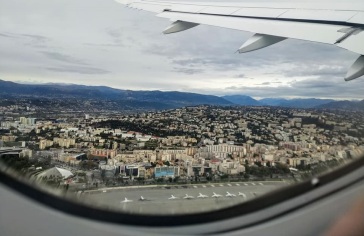
 

Flygskam

Flygskam :: Flight guilt 

 
Back when I was teaching my Theory in Anthropology courses it was challenging but not impossible, in the early 90s, to get students to imagine a society where the rules of capitalism did not pervade *all* actions, choices, perspectives. World systems theorists  from the late ’70s (eg: Emmanuel Wallerstein and Jane Schneider) and ethnographies from Oceania helped enormously, as did my own insights from participant observation and research in Tonga. But by the ’00s, it became harder and harder to get students to that place of intellectual flexibility required to recognize other, non-capitalist social systems, other social-economic formations, as viable, as really real.  While the originally contested concept of ‘culture’ as constructed by anthropologists became so mainstream that I could spend less time teaching what ‘culture’ was, recognition that non-capitalist relations to the environment and other species did exist became harder and harder to achieve. Maybe I became a poorer professor, but for me, students struggled more and more to think without capitalism as the default for society.
It is axiomatic in anthropological theory that it is difficult to ‘see’ [think\imagine] without one’s cultural lens affecting one’ perceptions. That axiom is the core of the participant-observation methodology, the idea that living as others live provides an avenue for seeing and thinking with a different cultural world view, leading to an appreciation and valuing of differences and  possibilities for critiquing one’s own status quo. The method works. 
But, as globalization pushed, and capitalism –as neoliberalism– achieved further, wider, deeper, capillary and rhizomic relations, I struggled to find ways to describe social formation alternatives to capitalism that didn’t sound to students like othering of indigenous peoples, or romanticized history, or science fiction. Despite my commitment to the ethnographic method, and Paul Mason’s work on post-capitalism aside, it seems to me now that literature –Ursula K. LeGuin, Margaret Atwood, Octavia Butler– is possibly the best avenue for reflecting on alternatives to a capitalist mode of ecosystem-destruction relations, simply because globalization and neoliberalism has completed the colonial plot. There are no contemporary sample societies to point to as unaffected, materially and culturally –not my beloved Tonga– by capitalist modes of production, by what Greta Thunberg neatly described as “fairy-tales of eternal economic growth“. Not even the famously xenophobic Sentinalese of the Andaman Islands are unaffected. Else why would they have the highly effective defense system that resulted in a wanna-be missionary’s death?
 
Eco-anxiety abounds, even among those who do not recognize they have it. It constantly surprises me that so many people think rivers are for viewing, maybe boating on, maybe fishing from, on the right day, in the right place (but catch and release or beware of how many you eat; avoid the belly fat, where the heavy metals concentrate). The default thinking of a river is not as something to drink. Unless with filters and purification tablets. Or in an emergency. It wasn’t always like this. I have lived with, I remember, environmental beauty appreciated via sight, smell, sound, feel, and yes, taste; without eco-anxiety. 
 
This is what I’m pondering, with my 3:30AM jetlagged brain, as I read Naomi Klein saying: “the fact that for so many people it’s so much more comfortable to talk about our own personal consumption, than to talk about systemic change, is a product of neoliberalism, that we have been trained to see ourselves as consumers first”.
 
Winter is here, but I can’t be hygge because I have flygskam. But my flygskam is not really a product –in the foucauldian sense– of my eco-anxiety. My flygskam is an indicator, evidence of another axiom: that capitalism atomizes. It induces us to think and respond and benefit as lone individuals, not as interconnected members of a system.  Capitalism works,  insidiously, to disguise it’s own capillary power, and to normalize those who control the capital that influences the global political, economic and social options and actions that are causing the climate crisis (while also exacerbating racism, sexism, poverty, disparity, war, alienation of indigenous lands, etcetera). I’m supposed to feel my flygskam on my own, rather than notice the scam, and scammers, that it signifies. That’s the capitalism mode. 
 
Is there a Swedish (or Sentinalese, maybe?) word for the anger I feel towards those who are blocking the systemic changes we all need to preserve this planet’s ecosystem? I want it; need it. 
November 12, 2019.
Some interesting links:
Capitalism:
Mason, Paul [2015] PostCapitalism: A Guide to our Future. Wikipedia summary: https://en.wikipedia.org/wiki/PostCapitalism:_A_Guide_to_Our_Future
Schneider, Jane [1977] “Was There A Pre-Capitalist World-system?” Peasant Studies 6:1:20–29.  Find it here: https://www.irows.ucr.edu/cd/books/c-p/chap2.htm
Wallerstein, Immanuel [1974] The Modern World-System, Vol. 1: Capitalist Agriculture and the Origins of the European World-Economy in the Sixteenth Century. New York: Academic Press.
Ethnographies:
Burawawoy, Michael [1979] Manufacturing Consent: Changes in the Labor Process under Monopoly Capitalism. University of Chicago Press
Weiner, Annette B.  [1979] Women of Value, Men of Renown : New Perspectives in Trobriand Exchange. University of Texas Press
Hygge:

Ecography

What is ‘ecography’ and why do we care?

The term ecography refers to “the inscription of human history and agency in a place and its inhabitants, and a mutual reinscription of land, sea, and dwellers into human lives. This is done by way of place names, emplaced stories, ceremonial titles, and remembered ritual” (Young Leslie 2007).

Cross-culturally, many peoples include non-human beings as ‘persons’  with whom they
interrelate in emotive, cooperative and/or competitive, and productive ways. These other persons, whether animal, plant or mineral forms, are often conceptualized in ways fundametally different from the post-entlightenment, post-industrial revolution sense associated with contemporary modernity, and Euro-Western science-influenced societies in particular. The pattern in most ecological and environmental thinking of our particular historical era (modernity and post-modernity) is to classify nature as separate from culture, and to categorize humans as cultural beings, part of the wider, ‘natural environment’, embedded in an ecosystem, but of a different order than the other lives in the same ecosystem; This category classifies humans separately from animals, plants, land-forms, etc. In the usual sense of this way of thinking, humans are persons, but other life-forms are not. Humans stand outside of the environment, are free to use it as a resource to be exploited. They also have the right to manage nature, the environment, the ecosystem. Indeed, Judeo-Christian-Muslim adherents have claimed a moral obligation to do so.

This is a historically particular, cultural way of thinking about ‘the environment’, one sort of mythopoetic story we tell ourselves about our place in the living universe. There are other explanatory stories. The anthropologist Marie-Claire Bataille-Benguigui documented  that in Tonga, ocean denizens such as fish, sharks, and turtles should be understood as “partners” rather than prey (1988). Anthropologists working in northern locales have made similar arguments for decades: foraging and hunting peoples, such as the Cree of Quebec (Feit 1995, 1991), the Dene of Northern British Columbia (Brody 1981), or the many nations of the northwest coast of Canada and the United States (see, eg, Gunther 1928; Jenness 1955, 6–9) all describe moose, beaver, salmon, and other animals as sentient beings who give themselves as food to humans, often out of love. Even predators and humans have found that cooperation and respect is mutually beneficial, as Elizabeth Marshall Thomas’s work on lions and Ju/’hoansi in the Kalahari demonstrates (2003), and as any Polynesians who count the shark as part of their ancestral genealogy may attest. There is less research on non-animal forms (ie plants and landforms) and human relationships, although the research on ‘place and space’ as understood in Australian Aboriginal nations (Bird Rose 1992, Rumsey and Weiner 2001), miners in Columbia and Bolivia (Taussig 1980), and Inuit using the arctic sea-ice (Aporta 2002, Nuttal forthcoming) compellingly indicates that places can also be understood to have volition, intention and act out of partnership or competition. Faroe Islanders make themselves kin to the landscape through naming (Gaffin 1996), in a process similar to the  tactic of using maternal family surnames as first names in patronymic societies such as Canada and the United States, where children usually take their father’s name as their surname.

However, in today’s world of commercial food mega-farming, where floating factories harvest in waters far from home, affecting local inshore fisheries in unprecedented ways; where harbours, mountain tops and open valleys are militarized for national security or solar science; where global warming and widespread contamination of the planetary ecosystem is denied rather than spook stock markets and jeopardize shareholders’ returns; where speculation on and gentrification of seasides, vistas and other pleasant ‘aspects’ creates homelessness; where aluvial deposits and rain forests are paved and parcelled into housing for urban citizens and relocated humans; In such a new world order,  ‘persons’ of all kinds, biota, lifeforms, landforms, sea lanes  and wind routes are evaluated on the basis of their percentage of the overall contribution to national economies and transnational shareholders’ profits. These contemporary geopolitics of desire are transfiguring the ecographies of our present and the mythopoesis of our future. The stories people use to put meaning into place, and places into ourselves are shifting. Ecography is the tactic for documenting and measuring the transfiguations.

References:

Aporta, Claudio 2002: Life on the ice: Understanding the codes of a changing environment. Polar Record 38 (207): 341-354.

Bataille-Benguigui, Marie-Claire
1988. The Fish of Tonga, Prey or Social Partners. Journal of the Polynesian Society, vol 97:185-198.

Feit, Harvey 1991 The Construction of Algonquian Hunting Territories: Private Property as Moral Lesson, Policy Advocacy and Ethnographic Error. In Colonial Situations, edited by George W Stocking, Jr, 109-134 Madison: Wisconsin University Press.

1995 Hunting and the Quest for Power: The James Bay Cree and Whitemen in the Twentieth Century. In Native Peoples: The Canadian Experience, edited by R Bruce Morrison and C Roderick Wilson, 101-128. Second edition. Toronto: Oxford Press.

Gaffin, Dennis 1996. In place: Spatial and Social Order in a Faeroe Islands Community. Prospect Heights, Illinois: Waveland Press

Gunther, Erna 1928. Further Analysis of the First Salmon Ceremony. (Doctoral Dissertation) University of Washington Publications in Anthropology, 2, 129-173.

Jenness, Diamond, 1955. Faith of a Coast Salish Indian. pp 6-9. Victoria: British Columbia Provincial Museum.

Marshall Thomas, Elizabeth, 2003. The Lion/Bushmen Relationship in Nyae Nyae in the 1950s: A Relationship Crafted in the Old Way. Anthropologica 45 (1): 73–78.

Nuttal, Mark 2007. Paper delivered at the meetings of the CASCA & AES, Toronto, May

Rose, Deborah Bird, 1992. Dingo Makes Us Human: LIfe and land in Aboriginal Australian Culture. Cambridge University Press.

Rumsey and J. F. Weiner (eds), 2001. Emplaced Myth: Space, Narrative, and Knowledge in Aboriginal Australia and Papua New Guinea, pp 233-245. Honolulu: University of Hawai’i Press.

Taussig, Michael, 1980. The Devil and Commodity Fetishism in South America. University of North Carolina Press.

Young Leslie, Heather, 2007. A Fishy Romance; Chiefly Power and the Geopolitics of Desire. The Contemporary Pacific Vol 19(2):tba.

    Creating a Better View
    Trees cut in Manoa valley, O’ahu, to improve the view to the ocean.